Its been 282 days since my last post. Why has it taken so long? I am not quite sure. I have been extremely busy since I lost my great job working for Children's Medical Services in Miami. First I needed to procure new work. That took 3 months... and finally I have found a home. AgencyNet Interactive, an award winning web 2.0 flash and more development company. They are great! I have been hired as their Network Adminisrator. I hope that I can do as good a job as the previous holder of the position. He did an amazing job with not much time or support. Kudos Chris Fullman!
Anyway, I have been working for AgencyNet for the last 5 months (1 temporary) and I have learned a lot. I have learned that I hate Bugzilla, I love ubuntu, losing my love for Windows, and starting to dislike Cisco (I need to get over that). This job is certainly not the CakeWalk that was CMS. Hard work, and long hours. But that's OK.
Also, I finished my Bachelor's of Science Degree in Information Systems Security from ITT last week! HUZZAH! after off and on for 11 years I have my BS. Finally! Now what to do? Take the next 3 months off? Get certifications? Start my masters in IT?I think that I won't think on it until after the new year.
I have also seen my Daughters 4th birthday this October. She is so precious! Not only do I love her, but I like her too, she is fun to be around! She is smart, knows her letters so well that I swear that she can read! At 4! I hope she can write as well as her mother can.
Well I should get back to work. I guess my New Years resoultion shall be to update this blog. hmmmm....
Friday, December 19, 2008


Monday, March 10, 2008
Wednesday 3/12/08
Hi there, another set of news posts. And classes are starting up again. I just don't know how often I wll update, but I will keep trying.
- Famed geneticist creating life form that turns CO2 to fuel - [Craig Venter says he is creating a lifeform that feeds on carbon dioxide to produce "fourth generation" fuels, and may have it working in 18 months. The organism would use CO2 as a feedstock and give off fuel such as methane gas as waste. Venter is also working on organisms that make vaccines for the flu and other illnesses. See Also Venter Takes Step Toward Synthetic Cells] - This gives me hope that people are out there that want to make the world a better place. Thank goodness.
- Plan to teach baby robot to talk - [University of Plymouth roboticists and language development experts plan to work with a humanoid baby robot called iCub to research how parents teach children to speak. Their findings could lead to the development of humanoid robots that learn, think and talk.]
- Quantum corkscrews from twisting electron waves - [Researchers from the RIKEN Frontier Research System have shown that vortices similar to those of "twisted light" can be produced in beams of electrons. Optical vortices can be made by passing a laser beam through a fork-shaped computer-generated hologram. Electron-beam vortices could be produced in a similar fashion, using a thin crystal plate with a dislocation. Such vortices could power nanomotors and nano-engines, or could be used in telecommunications by storing information in the optical vorticity, or the intensity of twisting. The vorticity is robust against perturbations, so this potential future technology could reduce the loss of information during optical communications.]
- St. Jude researchers find key step in programmed cell death - [St. Jude Children's Research Hospital researchers have discovered three molecules that together protect certain cells from undergoing apoptosis--programmed cell death--describing one mechanism for how cells may delay apoptosis. Molecular malfunctions that trigger apoptosis may cause some diseases, including Parkinson's disease.]
- Flexible robotic fin does away with drag - [Researchers have built a robotic fin that uses flexibility to produce constant thrust and eliminate drag while moving, mimicking the energy-efficient movement of a fish's pectoral fins. Fish-like fins could make autonomous underwater vehicles more agile: the bluegill sunfish can hover, rotate, move forwards and come to a stop using pectoral fins alone.]
- Robots enter Japan's daily life - [Japan is perhaps the closest country to a future where humans and intelligent robots routinely live side by side and interact socially: with more than a fifth of the population 65 or older, the country is banking on robots to replenish the work force and care for the elderly. Robots in Japan are serving as receptionists, vacuuming office corridors, and spoon-feeding the elderly. Over 370,000 robots worked at factories across Japan in 2005, about 40 percent of the global total and 32 robots for every 1,000 Japanese manufacturing employees.]
- The Digital Utility - [In a new book, The Big Switch: Rewiring the World, from Edison to Google, Nicholas Carr argues that we're moving from the era of the personal computer to an age of utility computing--by which he means the expansion of grid computing, the distribution of computing and storage over the Internet, until it accounts for the bulk of what the human race does digitally.]
- Got Sleep? CDC says 1 out of 10 Americans are sleep deprived! - [A Centers for Disease Control and Prevention (CDC) research study states that 10 percent of adults -- 50 to 70 million adult Americans -- are not getting sufficient rest or sleep every night. Chronic sleep loss and sleep disorders also raise the risk for additional health problems. The National Sleep Foundation reports that adults need seven to nine hours of sleep every night to be adequately rested.] - Ugg, no wonder I am feeling crappy all the time, I get around 5-6 hours a night...
- From TED to BIL - [In a talk at the BIL unconference following TED, entitled "Not the TED Commandments, or How to Be a Successful Heretic," gerontologist Aubrey de Gray offered ten commandments -- rules for successful revolutions in thinking.]
- The World’s Smallest Crime Lab - [George Mason University researchers have built a microwave smaller than an ant that can heat pinhead-size drops of liquid to precise temperatures--critical for the kind of lab-on-a-chip devices investigators could someday use in the field. One big potential payoff: a portable DNA-analysis kit that could use crime-scene evidence, such as a drop of blood, to produce the genetic fingerprint of the culprit.] - And it will just keep getting smaller, and smaller, and smaller....
- Physicists Discover Gold Can Be Magnetic on the Nanoscale - [Georgia Institute of Technology physicists have announced discoveries about gold's nanoscale properties: electric fields can change the shape of gold nanoclusters from pyramidal to flat, gold can be made magnetic, and oxygenated gold nanowires switch from being conductors to insulators when longer than 6 gold atoms in length. This marks the first time on the nanoscale that such a metal-to-insulation transition has been found. The results could result in new methods for controlling the behavior of nanostructures through the application of external electric fields.]
- 'Long-life' genes found in 100-year-old humans - [Albert Einstein College of Medicine researchers found two mutations that make people live longer. Both mutations affect the receptor for insulin-like growth factor 1 (IGF1). By making the receptor slightly faulty, the mutations may disrupt IGF1 binding and decelerate the process of maturation and aging.]
- Out of the Blue - [Ecole Polytechnique Federale de Lausanne computational neuroscientists hope to model a complete rat brain within two years on their IBM Blue Brain supercomputer and download it into a robotic rat to develop like a real rat--one with a "mind of its own." They also want to simulate what that brain experiences, and generate a movie of its reality rooted in the details of its brain. Beyond that, they want to simulate the trillion synapses in the human brain--about 500 petabytes of data--within 10 years.] - This is important! And a very good article.
- Prof posits metananocircuits as electronics' next frontier - [University of Pennsylvania professor Nader Engheta hopes to create electronic components and circuits in an entirely new regime--one where "current" is no longer defined as the movement of electrons and holes, but instead as an electromagnetic wave, leading to a new kind of optical information processing and perhaps a new form of nanoscale computational unit that would outperform conventional silicon electronics. His building blocks are metananocircuitry--composite nanomaterials that exhibit properties that are dictated by their nanoscale structures rather than their chemistry--and dielectric nanoparticles. For example, nanoparticles with positive permittivity could realize optical capacitors, those with negative permittivity, could realize optical inductors and resistors. Combining such components could lead to complex optical nanocircuits.]
- Konarka Announces First-Ever Demonstration of Inkjet Printed Solar Cells - [Konarka Technologies has announced the company conducted the first-ever demonstration of manufacturing organic solar cells by efficient inkjet printing.]
- Levitating joystick improves computer feedback - [Carnegie Mellon University researchers have developed a computer controller levitated by magnets that provides a more natural feel for physically experiencing virtual objects. The maglev interface gets rid of the mechanical linkages that are a major constraint on most haptic devices and operates in six degrees of freedom.] - Imagine encasing oneself into a magnetically sensitive suit and surrounding yourself with these magnets, one could simulate the entire bodies' range of movements and experience a true haptic interface.
- Greener Green Energy: Today's solar cells give more than they take - [Solar power produces, per unit of energy, only about one-tenth as much carbon dioxide and other harmful emissions (during manufacturing) as does conventional power generation, a new study by Brookhaven National Laboratory scientists shows. These improvements in efficiency mean that today's solar panels can "pay back" in only 1 to 3 years the energy needed to make them, the study concludes. Improvements in manufacturing efficiency could reduce emissions from solar power by another 50 percent within 5 to 7 years, the researchers say.]
Tuesday, March 4, 2008
Just posts this time...Sigh
- The Truth About Autism: Scientists Reconsider What They Think They Know - [Some autistics are leading a nascent civil rights movement, fueled by neuropsychological researchers who are taking a fresh look at the nature of autism. The condition, the researchers say, shouldn't be thought of as a disease to be eradicated. The autistic brain may not be defective, but simply different -- an example of the variety of human development. They've found that previous measures of autistic intelligence were severely flawed, that autistic brains are highly efficient in some tasks -- even superior in some intelligence tests.] - This is a very important article and I am glad to see that others are beginning to understand that aspies and auties like myself aren't diseased, were different. A huge distinction! I like how I think! I don't want to be cured!
- The Encyclopedia of Life, No Bookshelf Required - [Scientists are building a Web site called the Encyclopedia of Life, dedicated to documenting all species on Earth. Spearheaded by Harvard biologist Edward O. Wilson with $50 million initial funding, the first 30,000 pages will be introduced on Thursday this week. Within a decade, they predict, they will have the other 1.77 million.] - Neat idea! I like online references.
- Future Blogger - [MemeBox has announced the public beta release of Future Blogger, a blogging community dedicated to exploring the future. Visitors can post their thoughts, predictions and scenarios. Community ratings then determine page ranking for posts. The site's Future Scanner also aggregates and organizes information about the future by year and category.]
- The Future of Universal Water - [Futurist Peter von Stackelberg of research and consulting firm Social Technologies has released a report on the future of on providing clean water to the world. Less than 2% of the planet's water store is fresh, and much of that is threatened by pollution, he says. "By 2025, about 3.4 billion people will live in regions that are defined by the UN as water-scarce." He suggests ideas for technological advances in three major areas that will be critical for the hydrological future: desalination of seawater or brackish groundwater, purification of water containing chemical or biological contaminants, and conservation to cut demand.]
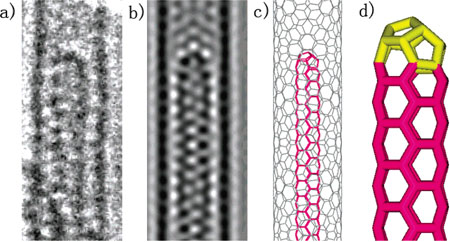
- Researchers demonstrate smallest possible carbon nanotube - [Researchers in Japan have synthesized the smallest (0.4 nm diameter) single-walled carbon nanotube by using thermal decomposition of ferrocene molecules inside larger commercial-grade nanotubes.] - What I find amazing is they have actually imaged the darn thing. We are so close to actually "seeing" the atoms themselves, if we haven't already!
- Breakthroughs in nanotechnology on edge of 'knowledge frontier' - [University of Missouri scientist Kattesh Katti has discovered how to make gold nanoparticles using gold salts, soybeans and water, an alternative to production methods using toxic chemicals. The new process could allow medical researchers to expand the use of gold nanoparticles for drug delivery and other purposes.]
Monday, February 25, 2008
After much hard work, I have a night to post...
Hi there. I just finished a ton of reports this last weekend, so I am able to post this evening. Sorry about last post. I just didn't have the time to comment on them properly. I will try better in this one. I am really falling behind on posting...Sigh!
- Artificial Playmates for Autistic Children - One of the first articles I found this evening combines autism and virtual people. Heh, it's like an article tailored with my specific interests in mind. I can't wait for my own virtual people to interact with. So much more predictable that the random, so called 'real' people are. I can see why autists would open up more readilly to them.
- Scientist postulates 4 aspects of 'humaniqueness' differentiating human and animal cognition - Iamba! This is an interesting article regarding our project to write about uplifting animals. It's not a heavy read and very informative.
- Michigan laser beam believed to set record for intensity - "The world's most intense laser beam uses 300 terawatts of power concentrated in a 30 femtosecond pulse to a 1.3-micron area, or 20 billion trillion watts per square centimeter. " That is a lot of watts.
- Scientists Develop Tool to Probe Role of Oxidative Stress in Aging, Disease - "University of Michigan researchers have a new technique to observe how oxidative stress affects proteins, allowing them to quantify the oxidation state of thousands of different proteins in a single experiment." Michigan is on fire! Go UM!
- Brain blanket boosts mind control - "With a sheet of electrodes placed over the brain, people can quickly learn to move a cursor around a computer screen using their thoughts." A step in the direction of direct brain-computer interface. I cannot wait to get rid of the keyboard and mouse...How quaint, indeed.
- The Chinese Government's Plans for Nanotechnology - "BOSTON, MA - China aims to leapfrog the United States in technological development with substantial investment in nanotechnology, but whether those efforts will actually pay off is still unclear. That was the message from University of California at Santa Barbara researchers presenting their findings on the state of Chinese nanotechnology here at the AAAS annual meeting. " China, India and Russia are going to be MAJOR economic players in the next 25 years, just based on thier populations alone. They also plan for the long term rather than our 4 year election cycle ADD the US suffers. That will allow them to build a strong and robust space system and possibly blow us out of the water science wise. We better watch out.
- Scientists move towards stem cell therapy trials to mend shattered bones - "Scientists are developing a revolutionary way to mend damaged bones and cartilage using a patient's own stem cells."
- Solar cell speeds hydrogen production - I hope this leads to ubiquitous hydrogen production for use in cars and home generators. This will decentralize energy production which will reduce the impact of distaster and our dependance on foriegn oil.
- Researchers discover new way to reverse poor circulation and heal wounds - "Researchers have solved a longstanding mystery about how flexing muscles “tell” nearby blood vessels that they need more blood to perform, according to a study published Feb. 15 in the journal Circulation Research. The study mechanism suggests new ways to treat conditions that involve poor circulation like peripheral artery disease, which comes with aging, affects 10 million Americans and leads to amputation in the worst cases. Furthermore, the same signals that influence circulation in some tissues drive cell growth elsewhere. That could lead to an ointment that would speed healing when spread across chronic wounds."
- The 10 Emerging Technologies of 2008 - Technology Review presents its annual list of the 10 most exciting technologies.
- Smart rubber promises self-mending products - Self-healing rubber that binds back together after being snapped or punctured could pave the way for self-healing shoes, fan belts, washing-up gloves and more.
- Replacing bulk with nanotechnology, researchers find new way to keep fiber-optic signal sharp - Cornell researchers have demonstrated that a single photonic microchip--using four-wave mixing to amplify an optical signal by "pumping" with another beam of light--can replace the bulky bundles of fiber or electronic amplifiers now needed to clean up and sharpen fiber optic signals distorted by distance.
- Genetic pathway critical to disease, aging found - University of Wisconsin-Madison scientists have discovered a gene expression pathway and specific enzymes that exert a sweeping influence over the process of oxidative stress, the process that contributes to many diseases and conditions ranging from Alzheimer's, heart disease and stroke to cancer and the process of aging. The finding is important because it represents a master pressure point for a host of medical conditions. One key enzyme in the new pathway--Star-PAP-- is a master switch that controls key aspects of oxidative stress in cells.
- Largest yet survey of human genetic diversity - Two researcher teams performed the most thorough genetic analysis yet on samples from the Human Genome Diversity Project (HGDP), confirming that populations lost genetic variation as they migrated farther from Africa and discovering that copy number variants (rearrangements within longer stretches of DNA) differ between human populations similarly to SNPs. Previous studies had either looked at fewer "markers"--sites of genetic variation--or fewer population groups. The HGDP covers more than 50 geographic groups from all over the globe.
- Scientists Measure What It Takes to Push a Single Atom - IBM scientists have measured the force needed to nudge one atom: one-130-millionth of an ounce of force pushes a cobalt atom across a smooth, flat piece of platinum, and one-1,600-millionth of an ounce of force pushes it across copper. To measure the force, an atomic force microscope tip was attached to a small tuning fork. Changes in the frequency of the tuning fork's vibrations as it pushed the cobalt atom let the scientists calculate the force applied.
- Google to Store Patients' Health Records - Google Inc. will begin storing the medical records of a few thousand people who volunteered to an electronic transfer of their personal health records, so they can be retrieved through Google's new service (not yet available to the public). I hope that this will become the standard for an EHR system (or something like this). We are desperately in need of such a system. It would increase the availability of health history which would decrease costs, reduce error, and increase the quality of care for the patients.
- PC beats doctor in scan tests - A computer does better than a doctor at diagnosing Alzheimer's from brain scans: trained computers had a 96% diagnosis success rate analyzing a clinical MRI scan, compared to an 85% success rate for doctors using standard scans, blood tests and interviews.
- No Directions Required--Software Smartens Mobile Robots - DARPA initiative to develop self-navigating robots introduces a world of potential for the development of autonomous vehicles, but will the government take advantage of its research or let it wither on the vine?
- 'Exaflop' Supercomputer Planning Begins - Researchers at Sandia and Oak Ridge National Laboratories have launched the Institute for Advanced Architectures to do basic research on issues such as power consumption and reliability for an exaflop (10^18 floating point operations per second) system that could have a million hundred-core processors. The U.S. Department of Energy and the National Security Agency expect to need exaflop computing by 2018 for large-scale prediction, materials science analysis, fusion research, and national security problems.
- Electron Stroboscope - Lund University scientists have recorded snapshots of electron motion, using 300-attoseconds-long light pulses to create images of the quantum state of electrons. An attosecond is one quintillionth (10^-18) of a second long.
- Going by the book - A group of Chinese scientists has discovered the main biochemical pathways in drug addiction—and without having to do a single experiment. This should lead us to curing addiction within 20 years.
- Solar Power to Rule in 20 Years, Futurists Say - Speaking on behalf of a panel of experts convened by the National Association of Engineers to address the 14 "grand challenges of the 21st century," Ray Kurzweil said solar power will scale up to produce all the energy needs of Earth's people in 20 years. Members of the panel are "confident that we are not that far away from a tipping point where energy from solar will be [economically] competitive with fossil fuels," Kurzweil said, adding that it could happen within five years.
- Kurzweil: 'Exponential' change ahead for games, people - Look for the price-to-performance ratio of computers to improve a billionfold in the next 25 years, Ray Kurzweil said in a keynote speech, "The Next 20 Years of Gaming," at the Game Developers Conference in San Francisco on Thursday, CNET reported. Kurzweil said game programmers should be developing ahead of the curve, considering the constantly changing face of game technology. "We may even have the ability to accurately represent the human brain or produce convincing human language -- dialog -- on the fly," Kurzweil said. "The implications and potential for the advancement of games from such technological leaps are exciting to ponder," Wired reported. Kurzweil's forecasts have "obvious and exciting implications for gaming," according to Game Helper. By 2010, we'll have electronics so tiny they are "embedded in the environment, our clothing, our eyeglasses"; images and video will be "written directly to our retinas" and "we will all enjoy a "ubiquitous high bandwidth connection to the Internet at all times." By 2029, "We will have developed a human-level non-biological intelligence; "$1,000 worth of computation = 1000 times the human brain"; and while biological intelligence is in essence "fixed," non-biological intelligence will continue increasing exponentially, and will combine "the subtlety and pattern recognition strength of human intelligence with the speed, memory, and knowledge sharing of machine intelligence."
- Stock exchange for 'grid' computing? - You might soon be selling your spare computer power over the internet, or perhaps buying in extra resources to solve a tricky problem. In either case, network administration used to be a stumbling block – until European researchers developed a successful free-market approach to grid computing.
- Physicists Demonstrate Qubit-Qutrit Entanglement - For the first time, physicists have entangled a qubit with a “qutrit” – the 3D version of the 2D qubit. Qubit-qutrit entanglement could lead to advantages in quantum computing, such as increased security and more efficient quantum gates, as well as enable novel tests of quantum mechanics.
- Seeds of Future Agriculture Enter Doomsday Deep Freeze - The first batch of 100 million of the most important agricultural seeds were placed into the "doomsday repository" Svalbard Global Seed Vault in Norway. The vault is a backup of last resort, stocked with copies of different crops from national seed storage facilities. In cold isolation the seeds can keep for hundreds and thousands of years--sorghum alone can last for 20,000 years--effectively allowing agriculture to be restarted in the event of a global calamity, such as nuclear war or catastrophic climate change. See Also Doomsday vault to avert world famine.
- Penn researchers engineer first system of human nerve-cell tissue - University of Pennsylvania School of Medicine researchers engineered living human nerve cells into three-dimensional neural networks with the potential to survive transplantation. Four neurons that survived months in culture. In previous work with rat neurons, the researchers demonstrated a new way to engineer nerve structures, or constructs, in culture. The new study uses the same method with human neurons, which survived at least three months in culture while maintaining the ability to signal. See Also Engineering nerve jumper cables for spinal cord repair.
Monday, February 18, 2008
Finals are coming, and I am not posting...
"We need schools which embrace the diversity within our community, not a diversity of schools dividing pupils and staff on religious grounds."-Mary Bousted
Hi! How are you today? I am fine... Oh right, enough small talk, just get to the news!
Hi! How are you today? I am fine... Oh right, enough small talk, just get to the news!
- Bacteria and nanofilters -- the future of clean water technology - Bacteria often get bad press, with those found in water often linked to illness and disease. But researchers at The University of Nottingham are using these tiny organisms alongside the very latest membrane filtration techniques to improve and refine water cleaning technology.
- Wiring Up DNA - Caltech and Columbia University researchers have measured DNA's ability to conduct electricity by wiring it up between two carbon nanotubes, creating a new way to detect mutations.
Introducing just a single letter change can drastically alter DNA's resistance, a phenomenon that they plan to exploit with a device that can rapidly screen DNA for disease-linked mutations. - Plucking Cells out of the Bloodstream - University of Rochester scientist Michael King and team have developed an implantable device that captures very pure samples of stem cells circulating in the blood.
The device, a plastic microtube coated with proteins called selectins, could lead to better bone-marrow transplants and stem-cell therapies, and may also be a way to capture and reprogram cancer cells roaming the bloodstream.
CellTraffix, which is commercializing the technology, is developing a kit that will enable researchers to capture large numbers of stem and cancer cells in the lab, and hopes to begin clinical testing of the anticancer coatings by early 2010. - Welcome to Cyberwar Country, USA - The US Air Force has launched the Cyber Command, dedicated to the proposition that the next war will be fought in the electromagnetic spectrum, and that computers are military weapons.
- Breaking disk encryption with RAM dumps - A security hack with video.
- Fabric may make the first real power suit - Nanofibres made that produce power when rubbed together.
- Functional Immune System Can Be Derived From Embryonic Stem Cells, Preliminary Study Finds - A new study demonstrates for the first time that embryonic stem cells can be used to create functional immune system blood cells, a finding which is an important step in the utilization of embryonic stem cells as an alternative source of cells for bone marrow transplantation. This hopeful news for patients with severe blood and immune disorders, who need these transplants for treatment, was prepublished online in Blood.
- Map reveals US disaster hotspots - University of South Carolina, Columbia scientists have created a map that shows where people would be hit hardest were a natural disaster to strike.
- Carbon Capture Strategy Could Lead To Emission-free Cars - Researchers at the Georgia Institute of Technology have developed a strategy to capture, store and eventually recycle carbon from vehicles to prevent the pollutant from finding its way from a car tailpipe into the atmosphere. Georgia Tech researchers envision a zero emission car, and a transportation system completely free of fossil fuels.
- New Technique Makes Tissues Transparent - California Institute of Technology, Ecole Polytechnique Federale de Lausanne, and MIT researchers have developed a technique that counteracts the scattering of light and removes the distortion it creates in images.
The "turbidity suppression by optical phase conjugation" (TSOPC) techniques used a holographic crystal to record the scattered light pattern emerging from a 0.46-mm-thick piece of chicken breast. They then holographically played the pattern back through the tissue section to recover the original light beam. - Bandwidth on Demand - An academic internet provides clues about ways to improve the commercial Internet.
- Metabolic Syndrome Linked to Cold Tolerance - University of Chicago researchers have discovered that many of the genetic variations that have enabled human populations to tolerate colder climates may also affect their susceptibility to metabolic syndrome, a cluster of related abnormalities such as obesity, elevated cholesterol levels, heart disease, and diabetes.
The researchers report that some genes associated with cold tolerance have a protective effect against the disease, while others increase disease risk. Genes that varied by climate included the lepin receptor, several involved in heat production, cholesterol metabolism, energy use, and blood glucose regulation. - Scientists Show Stem Cells Don't Cause Cancer - Japanese researchers have shown that stem cells made from reprogrammed adult skin cells can be implanted using a retrovirus without fear of causing cancer.
Last year, researchers showed that adult human and mouse skin cells could be reprogrammed into stem cells similar to embryonic stem cells, but a major concern with those stem cells was the possibility that the retrovirus used to implant the cells might cause cancer. - Shear Ingenuity: Tweaking The Conductivity Of Nanotube Composites - National Institute of Standards and Technology scientists have learned to tune the conductive properties of an polymer-nanotube composites (electrically conducting plastics) simply by changing changing processing conditions--how fast the polymer flows--without changing the carbon nanotube concentration.
- "Junk" RNA May Have Played Role in Vertebrate Evolution - New study says tiny snippets of RNA co-evolved with vertebrates, likely accounting for the new organisms' complexity
- Pulsing web gives ailing hearts a boost - UK researchers are developing a pulsing fibrous web to wrap around diseased hearts, designed to be less invasive than existing heart-assist techniques, which involve surgically connecting a pump directly into the heart.
Their device is made from polyethylene and has three constricting belts woven through its fabric, powered by small electric motors. - Smaller Version of the Solar System Is Discovered - Astronomers had found a miniature version of our own solar system 5,000 light-years across the galaxy -- the first planetary system that really looks like our own, with outer giant planets and room for smaller inner planets.
The new discovery was made by a technique called microlensing: the gravity of the nearer star can bend and magnify the light from the more distant one, causing it to get much brighter for a few days. If the alignment is perfect, any big planets attending the nearer star will get into the act, adding their own little boosts to the more distant starlight. - 21st Century's Grand Engineering Challenges Unveiled - The U.S. National Academy of Engineering (NAE) today announced 14 grand challenges for engineering in the 21st century that, if met, "would improve how we live by improving sustainability, health, and joy of living, and reducing vulnerability."
A diverse committee of experts from around the world chaired by former secretary of defense William Perry (committee chair) and including genomics pioneer J. Craig Venter, Google co-founder Larry Page, and Ray Kurzweil, developed the list of challenges. The effort received worldwide input from prominent engineers and scientists and the general public and its conclusions were reviewed by more than 50 subject-matter experts.
NAE is offering the public an opportunity to vote on which challenge they think is most important and to provide comments at the project Web site, www.engineeringchallenges.org, which features a five-minute video overview of the project and committee-member interview excerpts. A podcast of the news conference announcing the challenges will also be available on the site starting next week.
"Meeting these challenges would be 'game changing,'" said NAE president Charles M. Vest. "Success with any one of them could dramatically improve life for everyone."
The Challenges:
Make solar energy affordable
Provide energy from fusion
Develop carbon sequestration methods
Manage the nitrogen cycle
Provide access to clean water
Restore and improve urban infrastructure
Advance health informatics
Engineer better medicines
Reverse-engineer the brain
Prevent nuclear terror
Secure cyberspace
Enhance virtual reality
Advance personalized learning
Engineer the tools for scientific discovery
Well, that's it for today. Lots to read. Enjoy and have fun!
Friday, February 15, 2008
"Science is organized common sense where many a beautiful theory was killed by an ugly fact." -Thomas Huxley 1825 - 1895
Good afternoon!
I'll get right to it:
I'll get right to it:
- BIL & TED,… no way…Yes way - "TED brings together an extraordinary group of people every year. The catch for most of us is the cost: $6,000. So along with some friends I’m helping organize BIL (brainchild of Todd Huffman), which will be completely free, running March 1st and 2nd, immediately after TED.
We have the thumbs up from TED Curator Chris Anderson, who has been very supportive.
Check out the BIL website and add your name if you can attend.
I hope to see many of you in Monterey, California in a few weeks.
If you can, please spread the word!
See also this BIL & TED post from Ethan Zuckerman, one of the main TED bloggers.
I’m happy to say that SIAI is the founding sponsor of BIL." I think TED rocks! I love their talks and videos. Definately a site to check out. - Researcher leads international effort to create 'proteinpedia' - "A researcher at the Johns Hopkins Institute of Genetic Medicine has led the effort to compile to date the largest free resource of experimental information about human proteins. Reporting in the February issue of Nature Biotechnology, the research team describes how all researchers around the world can access this data and speed their own research." We need this for the general populace. I still don't understand why the Health Care record system in this country is so disjointed. Probably the same reason there is no universal health care system either...politics!
- Higher-Capacity Memory - "Nanochip's forthcoming array-based memory will provide an alternative to both flash memory and hard drives. In addition to storing more data than flash, it will be cheaper and can be about as fast. The first prototypes will store about 100 gigabytes; eventually, the devices could store terabytes' worth of data. The Nanochip technology stores information by applying a voltage to a thin-film material using an array of microscopic cantilevers, each with an extremely sharp tip. The size of each bit will be 15 nanometers in the first devices, but could theoretically be as small as just a couple of nanometers." I hope to see, within 8 years, hard drives and memory being integrated into one device, and not seperated like they are today. That will allow instant boot up devices and mobile devices that have huge storage capabilities with very robust reliabilty due to no moving parts.
- 'Recordable' proteins as next-generation memory storage materials - "Move over, compact discs, DVDs, and hard drives. Researchers in Japan report progress toward developing a new protein-based memory device that could provide an alternative to conventional magnetic and optical storage systems, which are quickly approaching their memory storage capacities. Their study is scheduled for the March 4 issue of ACS’ Langmuir. "
- de Grey appears on The Colbert Report - A must see.
- Researchers fashion copper for high-speed computing - "As computers and networks gain complexity one thing is always needed: more speed. With that axiom in mind, researchers today said they have developed a fabrication method to create all-copper connections between computer chips and external circuitry, significantly boosting the speed and amount of data that can be sent throughout a computer."
- New Test Detects Early Stage Ovarian Cancer With 99 Percent Accuracy - "Researchers at Yale School of Medicine have developed a blood test with enough sensitivity and specificity to detect early stage ovarian cancer with 99 percent accuracy." I am thinking that Cancer, as a deadly disease, has about 8-10 years. After that people might get it, but it will no longer be life threatening.
- UD researchers discover promising technique for repairing gene defect that causes spinal muscular atrophy - This is a very early step towards adult gene therapy and repair.
- Could smart traffic lights stop motorists fuming? - "Traffic lights that wirelessly keep track of vehicles could speed up journeys, reduce fuel consumption and improve urban air quality. So say Romanian and US researchers who show that "smart" traffic lights might reduce the time drivers spend waiting at intersections by more than 28% during rush hours."
Wednesday, February 13, 2008
A rainy day in Miami yesterday
It was raining heavily here in Miami yesterday. Finally a break from the sun. I love it when it's cool and overcast. Reminds me of home. What in the world am I doing here?!? Sigh...
I have a little story to tell today. This morning I was in my local Subway, getting my morning breakfast and cafe con leche, when this young man in line behind me wanted just a cookie, but all he had in his pocket was a $20 bill. The cashier shook her head and said she couldn't break that bill for a 50 cent item. The poor guy was crestfallen, so I told the cashier that I would pay for it (I wouldn't want anything to get in the way of me and MY cookie!). The young gentleman just stood there looking VERY confused and speechless. He just could not believe that I was buying a complete stranger a cookie, for no reason. His face got very red and he stood there what must have been 45 seconds trying to understand why I would do such a thing. I asked him if anyone had ever been generous with him before, and he said no. I said, "Well, I am from Oregon, NOT Miami, being generous is just my nature." He seemed to finally get that I wasn't asking for anything in return, that I just wanted him to have a cookie. "Plus," I told him, "its just 50 cents, its really no problem at all" He finally took the cookie and kept saying thank you, thank you, over and over. He was genuinly shocked. I guess I am too. I am a little sad that generosity and kindness is so uncommon. I hope I made his day a little better. Maybe he will pass it on.
Well, anyway here are todays tech news headlines:
I have a little story to tell today. This morning I was in my local Subway, getting my morning breakfast and cafe con leche, when this young man in line behind me wanted just a cookie, but all he had in his pocket was a $20 bill. The cashier shook her head and said she couldn't break that bill for a 50 cent item. The poor guy was crestfallen, so I told the cashier that I would pay for it (I wouldn't want anything to get in the way of me and MY cookie!). The young gentleman just stood there looking VERY confused and speechless. He just could not believe that I was buying a complete stranger a cookie, for no reason. His face got very red and he stood there what must have been 45 seconds trying to understand why I would do such a thing. I asked him if anyone had ever been generous with him before, and he said no. I said, "Well, I am from Oregon, NOT Miami, being generous is just my nature." He seemed to finally get that I wasn't asking for anything in return, that I just wanted him to have a cookie. "Plus," I told him, "its just 50 cents, its really no problem at all" He finally took the cookie and kept saying thank you, thank you, over and over. He was genuinly shocked. I guess I am too. I am a little sad that generosity and kindness is so uncommon. I hope I made his day a little better. Maybe he will pass it on.
Well, anyway here are todays tech news headlines:
- New Electronics Promise Wireless at Warp Speed - "Company uses nanoscale metals to build faster radios to wirelessly process video and other massive data files." Really cool process...
- Pursuing Synthetic Life, Dazzled by Reality - The NY Times is a great newspaper, but sometimes they just write fluffy peices...This one has some good info, but I don't like the way they put opinion in the report.
- Shmoocon's coming - As an IT security student, its nice to understand how hackers and crackers operate, so here is a convention where these things come together. Unfortunately I won't have the time off to attend, but maybe next year will be different.
- Brain Region That Can Be Stimulated To Reduce The Cognitive Deficits Of Sleep Deprivation Identified - I am, by nature, a night owl. I like to stay up late, but my job has me up much too early. I would love to have the effects of sleep deprevation be eliminated so I could stay up forever and use those 8 wasted (usually 5-6 for me) hours of sleep time. Between this new finding and the drug Provigil, I hope to be soon up for the duration!
- Team Uncovers New Evidence of Recent Human Evolution - Dr. Barry Sears of "Enter the Zone" diet book fame has also noted that one out of every four is genetically predisposed to handle grains and cereals without an ellevated insulin response. This study is the genetic evidence that backs up this claim. Now I want the gene therapy that applies it to me and fixes my older, obsolete genetic heratige! I want my cookies without the imballanced hormones that go with it!
- Researcher leads international effort to create 'proteinpedia' - "A researcher at the Johns Hopkins Institute of Genetic Medicine has led the effort to compile to date the largest free resource of experimental information about human proteins. Reporting in the February issue of Nature Biotechnology, the research team describes how all researchers around the world can access this data and speed their own research. "
- Scientists produce carbon nanotubes using commercially available polymeric resins - "Scientists at the Naval Research Laboratory (NRL) have successfully produced carbon nanotubes (CNTs) in high yields in bulk solid compositions using commercially available aromatic containing resins. The concentration of multi-walled carbon nanotubes (MWNTs) and metal nanoparticles can be easily varied within the shaped carbonaceous solid." GO NAVY!
- Brain Signal Linked to Autism - "Imaging the brain during social interaction reveals a deficit that may be tied to a sense of self." This article takes the position that autism is a disorder, that something is wrong with us. I am very curiuos as to the difference between us Aspys and the NTs (NeuroTypicals). But I would never say that we are difficient, and the NTs are not. That is highly erroneous in thinking and dangerous. Will the NTs force us to undergo genetic therapy to "fix" our difficiency? That is analogous to the "whites" fixing the "blacks" via genetic manipulation. Its just wrong. We are not sick, just different. We should celebrate our differences. Feh.
- Robotic glider feeds off ocean temperatures - Very cool article. I hope they are used and not just a 'novel concept'.
- Implants Create Insect Cyborgs - Incredible! When will the military do it to humans?
- Human Skin Cells Reprogrammed Into Embryonic Stem Cells - "UCLA stem cell scientists have reprogrammed human skin cells into cells with the same unlimited properties as embryonic stem cells without using embryos or eggs." Will this get Federal funding? Or is there some overarching moral issue preventing reasonable advances that will elleviate suffering and ban this as well? FEH!
- Studies identify factors associated with exceptionally long life - "Two studies provide new insights on exceptional longevity."
Thats all for today! I finally had some time to get this done, but much more is out there and it seems to be ramping up. Accellerating, one could even say.
Tuesday, February 12, 2008
A moment to breathe!
Wow, It has been a week or so since I last posted! I have been slammed at both work and school. Work, Work, Work! Well, here is some play time that I am making myself do.
- Intel Microchip Packs Two Billion Transistors - GO Moore's Law GO! This means 4 million transistors in 2010, 8 million in 2012, 16 million in 2014, etc...
- Eyes to the skies getting bigger - I have always wondered why is it that when we look for the center of the universe, the place where the big bang happened, it's all around us...in every direction. Shouldn't it be, oh I don't know, like off to the left and down, or something? Maybe someone out there could explain it to me? Leave a comment if you will.
- Team develops energy-efficient microchip - I see this appying to Body Area Networks very well.
- Tuning In to Nanotube Radio - "Researchers have made analog electronics out of carbon nanotubes." I suspect this may be the 6th Paradigm of computation. Integrated Circuits are the 5th and current Paradigm and follows Moore's Law, which is expected to hit a wall around 2020, approximately. Good to know that this new method is well on its way to replacing the venerable IC.
- Genetic 'telepathy'? A bizarre new property of DNA - What the?!? This is indeed bizarre. Read it for yourself.
- Embryos Created With DNA From 3 People - "British scientists have created human embryos containing DNA from two women and one man, a procedure that could potentially prevent conditions including epilepsy, diabetes and heart failure."
- With Mini in vivo Robots, Anyone Can do Surgery - "By attaching a millimeter-sized camera robot to a tether, scientists have designed a way to allow individuals with non-medical backgrounds to perform minimally invasive surgery in almost any location. Unlike room-size and expensive surgical robots, mini in vivo robots are inexpensive and mobile enough to support emergency surgeries almost anywhere, from the battlefield to outer space." By extension, with sufficient miniaturizastion and autonomous AI, we could have mini-surgeons permanently housed inside of us to perform on demand surgeries automatically, repairing us as needed as determined by its software parameters.
- Remote-control DNA 'pistons' could power tiny robots - This could enable molecular nano-factories, or the nano-surgeons I was just talking about above.
- Charles Ostman discusses synthetic biology and the Singularity - Damn, I just wanted to hear this guy, and it's on a pay for subscription site. I might cave in later and cough up the cash...I hope its worth it.
- Flexible, Nanowire Solar Cells - "Exotic materials and cheaper substrates could lead to better photovoltaics."
- New Thoughts On Language Acquisition: Toddlers As Data Miners - This is a valid research path for AI. By reverse engineering our own behaviors and starting at the infant level then growing the AI like a child, we should have greater success that if we tried to reverse engineer a fully mature adult.
- Rewritable holograms promise 3D displays - Interesting, but I feel a better approach would be to have contact lenses that are inherently 3D that can augment reality instead of a remote static display.
- Electromagnetic Railgun Blasts Off - "A supersonic bullet is fired with a record-breaking 10 megajoules of muzzle energy." Whoa Nelly!
Well, thats it for today. See you very soon!
Friday, February 1, 2008
Hola! ?Como esta? ...and that's about as much Spanish that I know...
- DNA construction kit self-assembles 3D 'crystals' - I wonder how strong these self assembling materials are? I can't imagine it being too strong if DNA is used as the linking structures. Plus it requires water as a sorrounding solution. This would be good for bioengineering, but limited in out of water applications. I am sure we could engineer a differant method though, using stronger materials, I have no doubt. And to reinforce my opinion...
- Artificial letters added to life's alphabet - I am continually amazed what our engineers can do!
- New Process Makes Nanofibers In Complex Shapes And Unlimited Lengths - I wonder if this process can be modified to make Carbon Nanotubes? Then the Space Elevator cable system could be created finally.
- Scientists discover a way to reverse memory loss in 'accidental breakthrough' - Instant memory retrieval? Wire me up!
- Cheap Hydrogen - A new process uses sunlight and a nanostructured catalyst to inexpensively and efficiently generate hydrogen for fuel. I have a concept of integrating this technology with tidal power, ocean current, and wind power, all on an ocean based platform. It would collect energy from as many sources as possible and could store the energy as hydrogen, or desalinate water for drinking and agriculture. It's still in the back of my mind, with no formal drawings as yet.
- The Next 25 Years in Tech - "PCs may disappear from your desk by 2033. But with digital technology showing up everywhere else--including inside your body--computing will only get more personal." Both this article and the next one are pretty conservative and reflect linear thinking. I think things will change faster than this. By 2029 a $1000 laptop will have as much computational power as a human. What will supercomputers have? How will the exponential growth rate of computation effect things such as Nanotechnology, Genetics, and Artificial Intellignece, which all effect each other in self reinforcing feedback loops. Not all things are being held equal, they are all changing at an exponential rate, so I would like to predict a much more aggressive proggression rate than most "experts" are willing to make.
- Five Sci-Fi Scenarios That Will Come True - "In the next 25 years, these technological advances, made famous in movies and on TV, will become reality. How accurate are our prognostications? Check back with us in 2033." - Very conservative in outlook.
- More Macs, More Mobile, More Open Source, Gartner Predicts - A better, more informed prediction set compared to the previous two articles.
- Researchers' nanotube findings give boost to potential biomedical applications - I had made a previous comment on a related article wondering about the safety of CNTs (Carbon NanoTubes) and their use in the body. Well I guess I have an answer :-)
- Death of the father: British scientists discover how to turn women's bone marrow into sperm - Whoever says we humans cannot create life in the lab have their heads in the sand.
Thats all for today. Have a great weekend!
Thursday, January 31, 2008
31 January 2008
Another round of exciting breakthroughs coming your way:
- Researchers Demonstrate Quantum Teleportation and Memory in Tandem - I want to explore the possibilities this may bring: Using quantum teleportation could it be possible to create a telecommunications device that instantly transmits and receives data irrespective of distance wih no media between transmitter and receiver? If so, quantum networking could enable us to build a data network throughout the universe with no propagation delay or interstellar media to etenuate a signal. This would allow colonies on the other side of the galaxy to instantly communicate with us in real time! Bandwidth would be astronomical! Whoa! Coupled with the incredible speed of quantum computing, this is truly transformative technology. What a way to start the links!
- Engineers demonstrate nanotube wires operating at speed of commercial chips - I am glad to see the next developing paradigm in computing substrates is well underway. All hail the Law of Accelerating Returns!
- Lab On A Chip Developed For Cheap, Portable Medical Tests -Further evidence that biology and medicine follow the same exponential growth trends that IT is enjoying.
Well, I had a busy day today. I didn't have much time to get many links in. I hope to get some later tonight, or more tomorrow, definately.
Wednesday, January 30, 2008
The Future, Today
Hi again,
- Tapping into the Cancer-Fighter Collective for Treatment - Uhhhh, you mean to tell me that they don't have this yet!??! WTF? I thought that they would have something like this for all medical issues TEN YEARS AGO! I am truly surprised! How hard is it to craft an SQL database and throw a web based interface on it? Amazon.com has been doing it since...ohh...the MID 90's?! SHEESH!
- What Are We Thinking When We (Try to) Solve Problems? - I wonder how an Aspy would do on these EEG tests? I tend to concentrate very long and hard, without breaks. But I don't consider that a 'wall' per say, just they way I think. I have hit walls, and it feels very much like I am hitting something physical with my mind, very strange to describe it that way though. When I do I have to reverse my thought direction and attempt to approach the problem from a different angle. Again, using spacial references to describe mental process seems to be the best way for me to describe my visual thinking style. Do other people think visually as well? If you do, pipe up and leave a comment :-)
- Morphine Dependency Blocked By Single Genetic Change - What we can do for Morphine addiction, we can do for Nicotine, Cocaine, Heroine, and a myriad of other addictions! WOW, great news and hope for millions of drug addicts. The dream of using drugs without becoming addicted to them are coming to to a pharmacist near you! WOOT! Come and get your Addiction Vaccine!
- Thinking About Tomorrow - Its interesting to see the lay person's view of the next ten years of possible technological progress, but they fail to consider the exponential growth rate that information technologies follow. in ten years computing devices will be over 1000 times more powerful and 1000 times smaller for the same $1000 that will buy today. This means cell phones in 10 years will have more computing power than a $10,000 computer, with all the bells and whistles, purchased today. What will that mean? I don't know, but 3-D projectors are conservative, IMHO. In my version of the next 10, I expect to see digital eye contact displays that are wirelessly connected to virtually project inherently 3-D images onto reality. This is called augmented reality and can be very powerful. Imagine no screen at all but a 6' x 8' "screen" projected into space wherever you look, even when your eyes are closed! Imagine having everyone's name (or nickname, tagline, whatever) floating above their heads. I would never forget someones name again. One could enter a virtual reality session and feel as if they are really there! It would track the position of your eyes and the display would change accordingly. With superior voice recognition we could turn it off with a word, and the mouse/keyboard combo would fade away. The cell phone would power the main computation component, the contacts be wireless and use solar power for energy, and small ear patches that attach behind the ears would provide sound. If you want to have a shared experience, just enable the link and your friends can experience it with you, even on another continent, at the same moment. When our clothes have circuitry embedded in them, they can track our motion and use that as an input device. On another topic, cars will be autonomous and drive by themselves. This will be MUCH safe for everyone and more convenient! Just tell the drive system to "Go to the restaurant." It will know which one from the reservations you have made on your Personal Computer and plot it accordingly. Whew! I get excited when I think of these things! I better stop here before my fingers get sore.
- Tool Use Is Just a Trick of the Mind - I recall a conversation with a friend of mine regarding what we are, and I mentioned that what makes us "us" is our pattern, not the material we are made of, although that has a significant impact, but the pattern of that material and energy. As we collect more information about our pattern we get closer to the truth of what makes us "us".
- New Method Exploits Ancient Mechanism To Switch Genes On And Off At Will - More fuel for the "Hackable DNA" fire!
- Shape-shifting magnetic bots take a page out of the Dharma playbook - Erik Drexler mentioned in one of his books that we may someday have "nanoswarms" that will self assemble to form anything we want, from houses, cars, to even bodies for our virtual minds to inhabit. May this be the first step in that direction? Nice short video here.
- Estimating the Exaflood, The Impact of Video and Rich Media on the Internet – A ‘zettabyte’ by 2015? - Fantastic article! Do I smell an excellent investment opportunity? Also, the below graph from the article appears suspiciously like an exponential growth plot...Hmmmm exponential growth? In IT? It couldn't be....

That concludes today...I will be back tomorrow :-)
Tuesday, January 29, 2008
Hello there! Another round of links I have found interesting:
- Couch potato lifestyle may speed up ageing - Damn! I am so doomed! GAHHHH! DOH!
- Tiny Living Machines - Novel approach to the 'scaffolding' idea.
- Invention: Nanotube X-ray enhancer - I wonder what the side effects of having millions of spear like nanotubes pierce and embed the cells lining arteries? Gathering that nanotubes are quite harmful to cells if not properly treated, probably would be quite disastrous. Also in this article is a patent for a Startling Tinnitus Test. If a person has previously damaged ears, why would it be a good idea to blast other noises at other frequencies to determine if a person has a lowered frequency response at the tinnitus freq range? My father has tinnitus from his time spent in Vietnam next to artillery emplacements, and he has to wear ear plugs because even moderately loud noises are painful to him. I can imagine him trying to sit through one of these Startling Tinnitus Tests for about 3 seconds before punching the clinician administering the test! LOL! "Just sit still sir, we need to see if you can bear more startling noises. Sir, we are just trying to see if you can hear this noise! Sir, please do not pummel the technician!"
- Looking into the Brain with Light - Does anyone else notice that non-invasive real-time medical scanning techniques are doubling in capability every year?
- Study Gives Key Role to Sleep in Helping Brain Learn Anew - Interesting findings. When we re-engineer the brain will we need to simulate these biological processes, or can we devise similar, but more efficient methods of learning process functions? Must we recreate what nature has devised? or can we create our own version that fulfills the requirement?
- New Alzheimer's Treatment Completes First Phase Of Testing - Is it me, or are they just treating the protein marker, not the actual cause of the disease? Does treating this marker reduce the effects of the disease?
- Biologists use computers to study bacterial cell division - Any simulation sufficiently accurate might as well be the real thing. This is a good step in that direction.
Ok kids, I'll see you tomorrow! Peace and Goodwill!
Monday, January 28, 2008
I'm back...
I am back after being sick most of the weekend. And instead of doing homework, like I was supposed to, I found a new diversion: Eve Online - I downloaded the Free Trial and I am fascinated by it's complexity, which is probably why most people don't like it. I think I am hooked. I hope my grades don't suffer... NAWH!
Anyway, here are some more of the new developments I love:
Anyway, here are some more of the new developments I love:
- Cesar: Geek out your powerwheels - Autonomous kid cars, this is very cool.
- Longest Piece of Synthetic DNA Yet - DNA synthesis is really taking off!
- Nano-Prospecting - Advanced Energy Consortium (AEC), which includes Halliburton Energy Services, BP America, and ConocoPhilips, will continue to put millions into a sinking ship, and disregard the impact to the environment. Sadly shortsighted.
- Richard Branson’s Remarks at the SpaceShipTwo Unveiling - Richard Branson is indeed a visionary, and one who's wealth can make a significant difference in the world for the better.
- The Coming Wave of Gadgets That Listen and Obey - It is interesting that DNA is proving easier to engineer than voice recognition...Hmmmmmm.
- Universal Influenza Vaccine Tested Successfully In Humans - This is great news! I hope that illness and aging will soon, like 15-20 years, be a thing of the past.
- Scientists hit back at Catholic church over 'cybrids' - Why is the Catholic Church always in other peoples business? It's as if they think, "If it's not good for us, It's not good for anyone, and should be banned!" They refuse to be educated on the issue, and tend to twist what little they actually understand all around for their own skewed, anti-science purposes. If they truly believe in respecting our common humanity, they would allow scientific progress that alleviates suffering and death, as human cloning shows just this sort of promise. I say get over it and help these people, instead of getting in the way for all the wrong reasons!
- Microchips Everywhere: a Future Vision - The concept of privacy is just a short term experiment. It came with the invention of Industrialization and developed as cities grew and as individuals left the small village, where everyone knew your business, to the city where you were just a faceless citizen in the collective crowd. I believe monitoring is all right, even desirable, as long as it works both ways. The monitoring agencies need to be monitored as completely and deeply as we are monitored by them. If you want to know what I do in the "privacy" of my own home, go ahead, but don't hold it against me, don't be offended, don't force me to change, because I am doing the same to you! The surveillance must be equal or the balance of power is lopsided and broken. Secrecy is the true problem, not privacy. Transparency can be very distopian or utopian, its our choice.
Hope you all have a great day!
Tuesday, January 22, 2008
The Day After The Day After MLK Day...
Hello all,
I am playing catch-up here in Miami after a long weekend. I finally have some time to post. First we start with news and then see where we end up:
I am playing catch-up here in Miami after a long weekend. I finally have some time to post. First we start with news and then see where we end up:
- Invention: 3D tissue printer + Implantable camera + Cheap desalination - Iamba made an earlier comment about fixing her "bad" eye... This may hold some promise, but might be expensive at first as most bleeding-edge technologies are.
- Rogue stem cells hold clue to melanoma growth - I am seeing more and more evidence linking stem cells and cancer. United Therapeutics to develop cancer therapies based on research in novel stem-cell-like cells, via exclusive license from MIT, Creating unlimited quantities of adult stem cells, New study supports a stem cell origin of cancer, New tests identify cancer "ringleaders" just to scratch the surface. I also like this TED video. I wonder how long before we discover the link turning stem cells into cancer and then how to prevent it.
- LET A THOUSAND GENOMES BLOOM - This is a great example of Accelerating Returns.
- Treating Muscular Dystrophy with Stem Cells
- DNA-Based Artificial Nose
- Rain Power: Harvesting Energy from the Sky - Very innovative! Might not be very efficient but nice application of alternative thinking.
- Targeted Gene Therapy Provides Relief For Chronic Pain, Study Shows - How long before I can have my genes create THC for me? ;-) (Just kidding...sorta)
- Misreading the mind - This author has it all wrong. Just like a single transistor cannot compute all alone, our neurons cannot either. But that doesn't mean we should ignore the transister as irrelevant, which is the feeling I got from the author of this article. Reductionism is an important factor in understanding the brain/mind connection. Not all of it, but important, nonetheless.
- Google to Host Terabytes of Open-Source Science Data - Google, the best company EVER?!? I think so!
- Moon Stuck: Space leaders work to replace lunar base with manned asteroid missions - Great article! I have long considered the Bush plan to return to the moon as short sighted and not far reaching enough. Let private enterprise go to the moon, NASA should be in the business of science and exploration. Will Bush Dubyah listen to this expert advise? Not likely, "I got a lot of Ph.D.-types and smart people around me who come into the Oval Office and say, 'Mr. President, here's what's on my mind.' And I listen carefully to their advice. But having gathered the device, I decide, you know, I say, 'This is what we're going to do.' "— Lancaster, Pa., Oct. 3, 2007. Gotta love the great "Decider"
- CIA Says Hackers Have Cut Power Grid - Interesting and related to my own field of current study.
- On Singularity: A user-driven news and discussion portal - From the Singularity Institute blogs. I have added it to my Google Reader.
Well, thats all the time I have for today. I have class tonight so won't post anything else I'm afraid.
Friday, January 18, 2008
Friday! Finally!
Lets start the day off right...
- Nasa investigates virtual space - Interesting that the BBC reports on an American space program. - As virtual presence technologies increase, we may not even have to send humans into space at all. As robotics, prosthetics, remote control, virtual senses, mind/machine interfaces, and other technologies mature, we can send robots that will act as our bodies much cheaper than sending ourselves. A robot won't need life support, food, shielding, or any of the other bulky and heavy things we need to survive a trip through space. Just send a lab-in-a-robot to the site and virtually control it in an MMO, and experience the site virtually as suggested in the article. Everyone can be an astronaut!
- Bionic eyes: Contact lenses with circuits, lights a possible platform for superhuman vision - This is absolutely AWSOME!
- Computer decodes dog communication - Wasn't I talking about this sort of thing last week? Heh.
- Cloning Said to Yield Human Embryos - I wonder what it would be like to be my own father and my own son? Thats like that dumb song, "I'm My Own Grandpa"
Well, thats it for now. I'm off to school. Gotta love the night classes.
Thursday, January 17, 2008
Tech News Thursday
Lets get started!
Maybe I should have called this post 'Nano' Tech News Thursday...
Maybe I should have called this post 'Nano' Tech News Thursday...
- Evolution of human genome's 'guardian' gives people unique protections from DNA damage
- Scientists discover new method of observing interactions in nanoscale systems
- Nanoparticles Generate Supersonic Shock Waves to Target Cancer
- Nanotechnology Innovation May Revolutionize Gene Detection In A Single Cell
- Star Trek-like 'Phraselateor' device helps police communicate - There are other Star Trek inspired inventions here.
- DNA 'fabricator' constructs walking DNA
- Killing Skin-Cancer Stem Cells
- A fully implantable hearing aid is showing promise
I didn't have time today to write any comments. I might later tonight.
Wednesday, January 16, 2008
Its Wednesday!
So I had a very interesting night last night. After work my good friend Iamba* came by and we had a great discussion regarding a story she wants to write with my help. She asked me for some ideas and the one I went with right off the bat is:
- In the near future we will have the understanding of what makes the human mind work, muscularly, biologically and functionally. We will be able to fix or repair brain damage, restoring functionality to those that have lost ability due to injury or illness. We will also be able to repair genetic damage that was caused at birth by applying these same techniques to eradicate retardation, Down's Syndrome and other mental deficiencies. Many feel it is ethically responsible for us to bring all of humanity up to a even playing field to allow all of us equal opportunity.
- But what if we understand what intelligence is and we can re-engineer all biological life such that we can grant human level intelligence to animals? Should we? Should humanity be the sole owners of intelligence? Should we uplift just chimpanzees? Should we uplift dogs, cats, pigs, cows, flies, anything?
- If we could talk with them, what would they say? How would they feel about not having an opposeable thumb and the inability to manipulate objects as finely as us? Would they want us to re-engineer them to be more like us so as to effect the world like we do? Or would they want something different?
- Would they want to be treated as equals and demand equal rights? Does that apply to just the uplifted animals and not the ones left behind? Should all animals be uplifted?
- What about the different factions of humans? One group feels that animals should be left alone; another says uplift them but engineer them to be willing slaves; another says they should have free will and manifest destiny; others say just add some intelligence, but not all the way, for WE should maintain our dominance.
- Would natural traits such as alpha instinct, pack mentality and predator/prey behavior be engineered out of them? Could they be? Would we be able to take this part of intelligence but not that part? If unable to weed out these behavioral instincts, how will they function in our civilized society? Would uplifted wolves still chase uplifted rabbits that run from everything? Or would the uplifted rabbits fight back with cunning and trickery?
- I feel the most interesting points will be to discover what these animals have to say. What does a whale sing about? Why does the Preying Mantis eat her mate after sex? Would the black widow spider share her knowledge of webspinning? Does my dog REALLY like me, or am I just a convenient food source, thus I shouldn't be pissed off. WHAT ARE THEY THINKING?
I hope to continue this project and get some feedback from Iamba as to what direction this will go.
We also waxed philosophical about talking politics with strangers. I really shouldn't! LOL. Without going into too much detail, I was sucked in to a morning commute conversation (I ride the Tri-Rail from Hollywood to Miami) with an acquaintance and she mentioned that I really don't talk much about politics. I mistakenly took that as a cue that she would be willing to have a nice discussion on various political views. I like differing views and like to discuss their pros and cons. Well, in short, she said something I understood to be, "The reason that Miami city government is so corrupt is," then in a very hushed tone and a furtive glance, "all the Cubans are used to getting around the system back on their island so they do it here." ...
I was shocked! I then asked if what I heard was correct. "Did I just hear you say that Cubans are to blame for the state of governmental corruption here?" She said, "Yes."
I then said, "I am not so sure I agree with the validity of that stereotypical statement. Do you happen to have evidence of the Cuban - corruption connection?" She began to get visibly upset. She said, "I didn't say that. I am not a stereotyper. I don't do that. That's not what I said!"
I then asked, "I'm sorry, but if that isn't what you said, what did you say? I just want to clarify that what I heard was correct."
She became more upset by the minute. Our stop came up and she bolted like I had just shot her. I followed, not understanding why she was practically running away. I caught up to her and said, "Have I upset you?" She repeated, "I am not a stereotyper or a racist!" and turned and walked away!" I attempted to apologize, but it fell on deaf ears.
On the bus ride to class later that night, I was replaying the event in my mind to see where I went wrong and have some questions:
- If someone says something in a hushed tone and furtive glances to see if anyone is listening, does that not mean they are aware that what they are about to say is possibly perceived to be controversial or not popular? Am I misinterpreting the body language here?
- Was my acquaintance angry at me for misunderstanding her statement, for calling her on it, or is she mad at herself for making the statement in the first place?
- Why do people want to discuss interesting controversial issues, but when they do, get upset and angry? I didn't feel angry at the woman for her view, I was just surprised she said it out loud. Why did she get angry? Why not discuss it rationally and evaluate the topic critically?
- I was dismayed to discover that our budding friendship was so fragile as to not handle even the slightest disagreement. I guess that it is better to have discovered this now before anything deeper had been created. I am just constantly amazed at the utter complexity of interpersonal relationships.
Iamba talked a little about this when I related the event to her. She said she tries to refrain from talking politics as most people are over emotional and not logical in their views. (I wonder why that is. Government should be dispassionate and reasonable.) She said that she will only discuss political theory, not working politics. I guess I will have to adopt that view to keep others from getting upset unnecessarily.
I thought I had said I wasn't going to go into detail...sigh...
*changed the names to protect the not so innocent...
Anyway, On to more positive topics like:
- Semantic Web takes big step forward - This is going to be as big a jump in use fullness as the web itself was.
- Self-Paced Brain-Computer Interface Gets Closer to Reality - I am waiting, impatiently, for my PC to just 'know' what I am thinking, just like my leg or arm does now. Keyboard? Mouse? Useless.
- Penn Engineers Create Carbon Nanopipettes That Are Smaller Than Cells and Measure Electric Current - This leads us to tiny repair tools that will slip into cells and repair DNA an organelles from the inside out, repairing age related damage and genetic abnormalities. Maybe even DNA restructuring. Also the possibility of inserting a nanopipette into neurons to monitor individual firing and create recordings of the resultant patterns in realtime. Fun stuff.
- Graphene quantum dot may solve some quantum computing problems - Could this be the next paradigm in computation, after the IC chip?
- Pushing The Limits Of Computer Chip Miniaturization - Another related article to computational paradigms. With further refinement and improvement, Moore's Law could go to 2020, but we should be well into the next substrate of computing before then. I do like how this article shows the Accelerating Returns that IC chips have followed. The next 20 years will have 1 million times more change than the last 20. WOOT!
- Food from cloned animals deemed safe in US - Why did it take over a year to determine if cloned animals are safe to eat? Muscle is muscle, regardless of how it is born...I'm confused here. And why are two thirds of consumers wary of cloned products? Same reason as for the reluctance to accept Genetically Modified foods? (They don't realize that most domesticated animals have been genetically modified for centuries. Its called selective breeding.) I guess they really don't know what it is, and thus are afraid of what they don't understand. Unfortunately change is accelerating and consumers will understand less and less, does that mean they will consume less and less? When everything is like magic, will they stop consuming altogether?
- Has AT&T Lost Its Mind?A baffling proposal to filter the Internet. - Nice way to destroy a company.
- MacBook ErrWhy I'm disappointed in Apple's ultraslim new laptop. - Smaller sizes. Greater capabilities. I am loving this day and age. Can't wait for the "PC in a pill"
Tuesday, January 15, 2008
Tech news daily
Here is another post set of the tech news I love and look for everyday. ENJOY!
- Monkey’s Thoughts Propel Robot, a Step That May Help Humans - I so look forward to seeing quadriplegics walking and moving like natural beings, independent and having a high quality of life. I also see visions of remotely controlling a robot "body" in harsh environments like underwater, volcanoes, the arctic, and space by using our thoughts. Remote sensing tech is also maturing at the exponential rate that most IT technologies are, so we will be able to "see, hear, and touch" the remote environment. In situ by proxy? I also like the idea of an exoskeleton that can augment the users strength, carrying capacity, endurance, and also protect the wearer. Powered Armor anyone? Another thought occurs to me, our interfacing with computers and machines are very crude and require training and practice, but a monkey, in just an hour could mentally manipulate complex robotic legs just by intuitively thinking about it, just like it were her own legs! We need to connect with our machines mentally and just use the equipment, not train, not practice, just think about it like moving an arm or leg. Easy, Breezy! How to use Windows XX would be a thing of the past, we would just know how to do it intuitively as the OS of the future would be connected directly into the brain. Exciting!
- Tinkering extends life of organism by 10-fold - By extrapolation, the average lifespan for humans worldwide is 67 (Wikipedia) so that could possibly mean 670 years, average? WOOT! 2641AD Here I come! I just need the pill for caloric restriction, the gene therapy, and I am set! BOOYAH!
- And then I read this: Robotic exoskeleton to help farmers with heavy lifting - Sometimes, even I am surprised with how fast tech is coming...Funny, I was just thinking about this, LOL.
- Cheap Ethanol from Tires and Trash - I am all about recycling, but what are the environmental effects of continued carbon release through hydrocarbon burning? We need to sequester the carbon we release, which is why I like [Making Gasoline from Carbon Dioxide] and [Biofuels on a Big Scale] which have a much lower carbon footprint. Yes, biofuel releases us from foreign oil dependence, which is a good move politically and economically, but at what cost ecologically? Anyway, I might want to invest when they go public. - Thought: Since nanotechnology requires carbon to create diamondoid structures, could we use solar cells to scrub and collect carbon as stock material for molecular manufacturing microfacilities? Thus a free source of nanomaterial to make virtually any object that is environmentally friendly. Hmmm.
- Researchers find new way to block destructive rush of immune cells - I love PhysOrg.com!
- T-cell 'nanotubes' may explain how HIV virus conquers human immune system - So, does HIV and AIDS have 5-10 years left before cured?
That's it for today. See you soon.
Subscribe to:
Comments (Atom)
